Address
Nairobi
Work Hours
Monday to Friday: 8AM - 5PM
Address
Nairobi
Work Hours
Monday to Friday: 8AM - 5PM

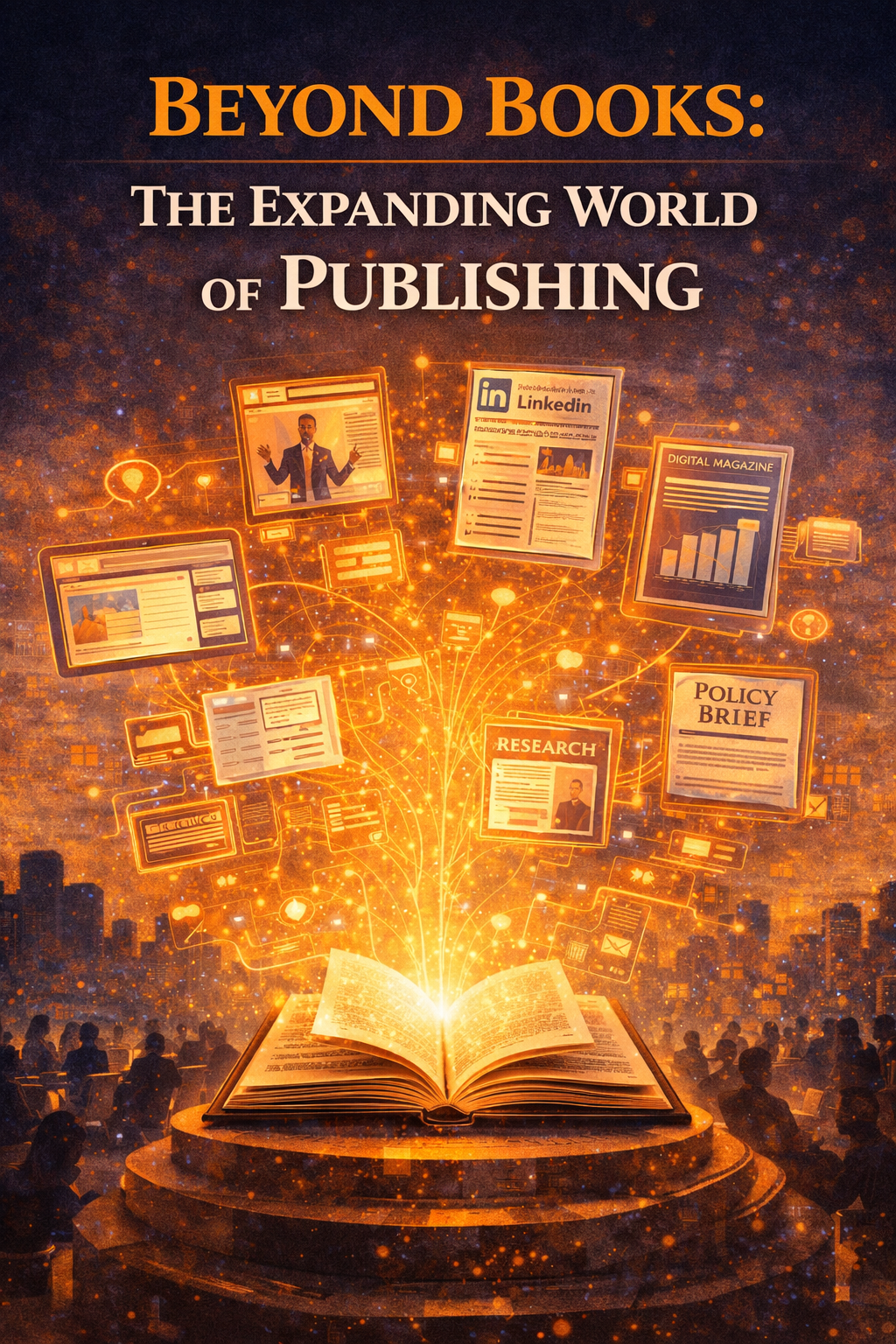
“To fully appreciate the role of publishing today, we must move beyond its traditional definition.”
For many, publishing still evokes the image of books — carefully written manuscripts, printed and distributed over long cycles. Others associate it with academic journals, often confined within institutional boundaries.
While these forms remain important, they no longer define the full landscape that is publishing.
Truth is, publishing has expanded into a dynamic ecosystem of formats, each designed to serve different functions within the knowledge economy.
For instance, digital magazines curate and elevate diverse perspectives, shaping how industries see themselves; research syntheses translate complex evidence into accessible insights that practitioners and policymakers can apply; and policy briefs distill analysis into actionable recommendations, influencing decision-making at institutional and governmental levels.
Further, professional guides convert lived experience into structured learning tools, enabling knowledge transfer across contexts, while LinkedIn newsletters and long-form digital content allow individuals to build sustained engagement with global audiences, democratizing thought leadership in unprecedented ways.
Organizations themselves are increasingly becoming publishers.
Through storytelling assets, impact reports, internal knowledge documents, and public-facing thought leadership pieces, organizations are documenting not only what they do, but what they learn — and what others can learn from them.
Publishing, in this expanded sense, therefore is no longer episodic — it is continuous. It is not confined to a single output — it is an ongoing process of capturing, refining, and sharing insight.
At the heart of this shift lies a powerful truth: Content is credibility.
In a world saturated with information, credibility is not assumed. It is demonstrated — through clarity of thought, consistency of voice, and relevance of insight.
Because, while titles may open doors, published thinking sustains influence.
Organizations and professionals who invest in structured publishing do more than increase visibility. They shape how their industries think; influence how problems are defined and solved, and position themselves not just as participants, but as contributors to the evolution of their fields.
Visibility, in this context, is not about being seen — it is about being heard, understood, and referenced. It is about becoming part of the intellectual fabric of an ecosystem.
…and this is where the opportunity — and responsibility for Africa becomes clear.
A continent rich in ideas cannot afford to remain under-published.
Because in the absence of documented African thinking, others will define the narrative. But when African professionals, institutions, and ecosystems invest in publishing as infrastructure, something shifts.
…and over time, Africa does not just participate in global conversations — it helps define them.
